

Free Download Natural Causes: An Epidemic of Wellness, the Certainty of Dying, and Killing Ourselves to Live Longer, by Barbara Ehrenreich
Besides, this book is likewise composed by one of the most popular writer in the country. So, when you admire the author so much, it will certainly complete the collections of the compositions. However, when you are not extremely fan of the writer, you can still love Natural Causes: An Epidemic Of Wellness, The Certainty Of Dying, And Killing Ourselves To Live Longer, By Barbara Ehrenreich since you will certainly know exactly how the writer informs the material to the visitors and also society. You could make deal with this publication as one of referred details to make you really feel admired so much with this publication.
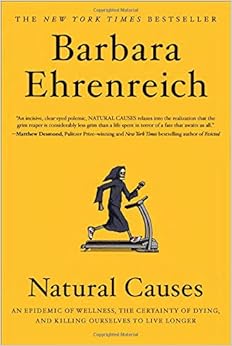
Natural Causes: An Epidemic of Wellness, the Certainty of Dying, and Killing Ourselves to Live Longer, by Barbara Ehrenreich

Free Download Natural Causes: An Epidemic of Wellness, the Certainty of Dying, and Killing Ourselves to Live Longer, by Barbara Ehrenreich
What's issue with you? Do you not mind to do anything in your spare time? Well, we believe that you need something brand-new to acquire today time now. It is not kind of you to do absolutely nothing in your free time. Also you need some soothing relaxes; it doesn't indicate that your time is for negligence. Were really certain that you need additional thing to accompany your leisure time, do not you?
Yet, do you assume that reviewing book will make you feel tired? Sometimes, when you constantly review as well as finish guide promptly and hurriedly, you will certainly feel so tired to invest sometimes to check out. Here, you could expect having only little time in a day or juts for spending your free time. And the book that we come currently is Natural Causes: An Epidemic Of Wellness, The Certainty Of Dying, And Killing Ourselves To Live Longer, By Barbara Ehrenreich, so it will certainly make some enjoyable for you.
After downloading and install the soft file of this Natural Causes: An Epidemic Of Wellness, The Certainty Of Dying, And Killing Ourselves To Live Longer, By Barbara Ehrenreich, you can begin to review it. Yeah, this is so enjoyable while somebody must review by taking their huge publications; you remain in your brand-new method by only handle your gadget. Or perhaps you are working in the office; you can still use the computer to check out Natural Causes: An Epidemic Of Wellness, The Certainty Of Dying, And Killing Ourselves To Live Longer, By Barbara Ehrenreich totally. Obviously, it will not obligate you to take several pages. Simply web page by web page depending on the moment that you have to check out Natural Causes: An Epidemic Of Wellness, The Certainty Of Dying, And Killing Ourselves To Live Longer, By Barbara Ehrenreich
Something different, that's something splendid to read this kind of representative publication. After obtaining such book, you may not have to consider the way your participant concerning your troubles. Yet, it will certainly provide you truths that could influence how you stare something and also think about it appropriately. After reading this book from soft file given in web link, you will certainly know just how exactly this Natural Causes: An Epidemic Of Wellness, The Certainty Of Dying, And Killing Ourselves To Live Longer, By Barbara Ehrenreich comes forward for you. This is your time to pick your publication; this is your time to come to your necessity.
Review
p.p1 {margin: 0.0px 0.0px 0.0px 0.0px; line-height: 17.0px; font: 14.7px Arial; color: #000000; -webkit-text-stroke: #000000} span.s1 {font-kerning: none; background-color: #ffffff} span.s2 {font-kerning: none} "Ehrenreich's sharp and fearless take on mortality privileges joy over juice fasts and argues that, regardless of how many hours we spend in the gym, death wins out. An incisive, clear-eyed polemic, NATURAL CAUSES relaxes into the realization that the grim reaper is considerably less grim than a life spent in terror of a fate that awaits us all."― p.p1 {margin: 0.0px 0.0px 0.0px 0.0px; font: 12.0px 'Helvetica Neue'; color: #454545} Matthew Desmond, Pulitzer Prize-winning and New York Times bestselling author of Evicted p.p1 {margin: 0.0px 0.0px 0.0px 0.0px; line-height: 14.0px; font: 12.0px Times; color: #000000; -webkit-text-stroke: #000000} span.s1 {font-kerning: none} "...[A] provocative, informative, hilarious, and deeply moving book. A must read."―Arlie Hochschild, New York Times bestselling author of Strangers in their Own Land: Anger and Mourning on the American Right p.p1 {margin: 0.0px 0.0px 0.0px 0.0px; line-height: 17.0px; font: 14.7px Helvetica; color: #212121; -webkit-text-stroke: #212121; background-color: #ffffff} span.s1 {font-kerning: none} "Throughout the text, [Ehrenreich] employs the erudition that earned her degree, the social consciousness that has long informed her writing, and the compassion that endears her to her many fans...A powerful text that floods the mind with illumination-and with agonizing questions."―Kirkus (starred review) p.p1 {margin: 0.0px 0.0px 0.0px 0.0px; line-height: 18.0px; font: 16.0px Helvetica; color: #212121; -webkit-text-stroke: #212121} span.s1 {font-kerning: none; background-color: #ffffff} "[Ehrenreich] offers a healthy dose of reformist philosophy combined with her trademark investigative journalism. In assessing our quest for a longer, healthier life, Ehrenreich provides a contemplative vision of an active, engaged health care that goes far beyond the physical restraints of the body and into the realm of metaphysical possibilities."―Booklist p.p1 {margin: 0.0px 0.0px 0.0px 0.0px; line-height: 17.0px; font: 14.7px Helvetica; color: #000000; -webkit-text-stroke: #000000; background-color: #ffffff} span.s1 {font-kerning: none} "Barbara Ehrenreich is a singular voice of sanity amid our national obsession with wellness and longevity. She is deeply well-informed about contemporary medical practices and their shortcomings, but she wears her learning lightly. NATURAL CAUSES is a delightful as well as an enlightening read. No one who cares about living (or dying) well can afford to miss it."―Jackson Lears, PhD, Editor in Chief of the Raritan Quarterly Review p.p1 {margin: 0.0px 0.0px 0.0px 0.0px; line-height: 14.0px; font: 12.0px Georgia; color: #121212; background-color: #ffffff} span.s1 {font-kerning: none} "This book is joyous. It is neither anti-medicine nor anti-prevention; it is pro-balance, pro-scepticism and pro-perspective. Paradoxically, Natural Causes is about hope. If you are struggling with choices that weigh hope in potential medical advances that damage quality of life against non-treatment and the acceptance of a terminal diagnosis, this may not offer much comfort, but...as with so many of Ehrenreich's books, NATURAL CAUSES is a much-needed tonic."―The Guardian p.p1 {margin: 0.0px 0.0px 0.0px 0.0px; line-height: 18.0px; font: 16.0px Arial; color: #212121; -webkit-text-stroke: #212121; background-color: #ffffff} span.s1 {font-kerning: none} "'Give me a lever and a place to stand and I will move the earth,' promised Archimedes. In Natural Causes, Barbara Ehrenreich has achieved an Archimedean feat. Her lever is made of erudition, acuity and irreverence; her place to stand is the perspective of cultural criticism; and she has turned the current understanding of body and self upon its head. To read this book is a relief: at last, what needed to be said!"―Jessica Riskin, author of The Restless Clock: A History of the Centuries-Long Argument over What Makes Living Things Tick p.p1 {margin: 0.0px 0.0px 0.0px 0.0px; line-height: 27.0px; font: 21.0px Arial; color: #111111; -webkit-text-stroke: #111111; background-color: #ffffff} span.s1 {font-kerning: none} p.p1 {margin: 0.0px 0.0px 0.0px 0.0px; line-height: 18.0px; font: 16.0px Helvetica; color: #212121; -webkit-text-stroke: #212121} p.p2 {margin: 0.0px 0.0px 0.0px 0.0px; line-height: 17.0px; font: 14.7px Helvetica; color: #212121; -webkit-text-stroke: #212121} span.s1 {font-kerning: none; background-color: #ffffff} Claiming to be 'old enough to die,' feminist scholar Ehrenreich (Living with a Wild God) takes on the task of investigating America's peculiar approach to aging, health, and wellness...Ehrenreich's sharp intelligence and graceful prose make this book largely pleasurable reading."―Publishers Weekly p.p1 {margin: 0.0px 0.0px 10.0px 0.0px; line-height: 16.0px; font: 14.0px 'Times New Roman'; color: #333333; -webkit-text-stroke: #333333; background-color: #ffffff} span.s1 {font-kerning: none} "...[R]ichly layered with evidence, stories and quotations...and sprinkled with barbed humor. Ehrenreich lets nobody off the hook, skewering Silicon Valley meditators and misogynist obstetricians with equal vigor. It's impossible to read this book without questioning the popular wisdom about the body and its upkeep. At the very least, you'll be able to make better decisions about how to work out, whether to have that mammogram and when to just order the steak."―BookPage p.p1 {margin: 0.0px 0.0px 0.0px 0.0px; line-height: 17.0px; font: 14.7px Helvetica; color: #212121; -webkit-text-stroke: #212121} span.s1 {font-kerning: none; background-color: #ffffff} "[Ehrenreich's] description of cells rushing to staunch a wound is so full of wonder and delight that it recalls Italo Calvino...She sits in contemplation of death itself in the book's concluding, very beautiful passages, bringing to it her characteristic curiosity and awe at the natural world."―The New York Times
Read more
About the Author
p.p1 {margin: 0.0px 0.0px 0.0px 0.0px; font: 15.0px Calibri; -webkit-text-stroke: #000000} span.s1 {font-kerning: none} Barbara Ehrenreich is the author of over a dozen books, including the New York Times bestseller Nickel and Dimed. Winner of the 2018 Erasmus Prize for her work as an investigative journalist, she has a PhD in cellular immunology from Rockefeller University and writes frequently about health care and medical science, among many other subjects. She lives in Virginia.
Read more
Product details
Paperback: 272 pages
Publisher: Twelve; Reprint edition (April 16, 2019)
Language: English
ISBN-10: 1455535893
ISBN-13: 978-1455535897
Product Dimensions:
5.4 x 1 x 8.2 inches
Shipping Weight: 7.8 ounces (View shipping rates and policies)
Average Customer Review:
3.5 out of 5 stars
192 customer reviews
Amazon Best Sellers Rank:
#100,714 in Books (See Top 100 in Books)
I just finished reading this and closed the book with a satisfying snap. As with all really good to great books, I finished it knowing more, in the case of this book much more, than when I started.This isn't really a book for the young, although some will get good from it. It's a book for those of us who are of a certain age, or, have parents of a certain age and are wrestling with what the means to them, and to us.It is also not a book for devout theists of any flavor. Ehrenreich's atheism is in full view throughout the book.Although not what I would call a consistently uplifting read, I would say that I finished the book with a sense of calm and a far better appreciation for dealing with end of life issues and thoughts that come from the existential nihilism many of feel as we get older in general. I also found it very well written and an easy read (I finished it over a couple of days). Although I wouldn't recommend it to everyone I know (in particular the born-again Christian types, or any other particularly religiously fanatic person), I would recommend it to a majority.Buy the physical version. Read it. Share it with those you love. You won't regret it.
What a treat it was to read this book! I’m not familiar with events at the cellular level in my body, or whatever else is going on in there, as long as it doesn’t hurt. But Ehrenreich makes this understandable, fascinating, funny, and serious at the same time. The book, however, isn’t all about cells. She takes us through a critical look at our health fads and dissects their supposed beneficial benefits. Turns out, you can eat all the kale and seaweed or whatever’s in style right now, but it won’t save you from your eventual death; we’re all going to die, right? Our deaths depend on many things we have no control over, such as cancer, a heart attack, or nuclear war. Ehrenreich also examines our burgeoning “preventive medicine†culture as a huge money-maker for doctors and hospitals, but not necessarily of much benefit to people.I’ve always wondered why death is practically taboo in our culture; it’s treated as something to whisper about and to avoid at all cost. I’ve known lots of people who are scared to death about dying. Why? If you’re religious, you get to live in Heaven for eternity (which doesn’t sound too good to me; wouldn’t it get boring?). Or if you’re not religious, you can imagine nothingness: no pain, heartache, regrets, money issues, etc. Are we so self-centered that we can’t imagine not being alive? The takeaway: enjoy your life while you can, don’t go crazy over food or exercise fads, and go gently into that good night when your time comes.
Wow, what a disappointment. Perhaps my expectations were too high? I acknowledge that I expected a lot from the writer of "Nickel and Dimed", the book that changed my tipping habits in particular and my view of the life of the low-level worker in general. And the subject matter of "Natural Causes" was perfectly in sync with my circumstances: dealing with advancing age and a cancer diagnosis. My situation has been fermenting since early 2017 and by now I've come to the conclusion that my generation, the boomers, are not going to put up with the medical / pharmaceutical / health insurance industry's standard operating procedures. Instead, we were going to take charge of our lives, our healthcare, and the manner of our death.After reading the NY Times review of this book, and hearing the author interviewed in a Slate podcast, I put in my order to Amazon immediately. I was confident I would enjoy reading somebody who was both an excellent writer and with a solid background in science, and whose views about healthcare in later years seemed to parallel my own. My hope was that along with enjoying the book, I'd be provided with arguments I could use in endlessly frustrating discussions with doctors and insurers. (Example of a frustrating discussion: I value quality of life over quantity, but my doctors take the opposite view and plan treatment accordingly. Whose opinion should prevail? Well, whose life is it, anyway?)With my expectations at such a high level, I was all the more unprepared for a laborious, poorly researched and prepared kvetch against the medical establishment that by its weakness made the issues at hand appear overly subjective and self-centered. Barbara Ehrenreich, what has happened to you?If wanting to be in charge of your medical treatment means you are self-centered, I stand guilty. I don't buy into the myth of the doctor as the all-knowing oracle for curing your ills, and that the patient should be a passive partner in the treatment planning process. But I wasn't ready for Ehrenreich's attempt early on in the book to demonize the medical profession, or reject doctors' advice out of hand. Her attitude harks back to man-hating excesses of early-generation feminism as Ehrenreich equates colonoscopies with sexual assault. Or, when she interprets the (always male, she asserts) gynecologist's white jacket as identifying the dominant player in a ritual where the woman receiving a pelvic exam is deliberately positioned in a receptive position. To me this is nonsense, the fantasy of someone who feels victimized by everything and who assigns absurd motivations to her supposed oppressor. In places, this author seems to have lost touch with reality.It doesn't get better. I have no time for new-age homeopathic practitioners, so was surprised to read this Ph D's accusation that after aligning medicine with science in the late 19th century, the profession "won its monopoly over the business of healing" by deriding homeopathy, chiropractic, and other forms of quackery as "pseudoscience." But they are!She dismisses preventive care as mostly a scam, and even though she exercises she condemns striving for fitness as just another example of our culture of narcissism. There are worthwhile arguments to be made against the excesses of medical testing and the false promises of the fitness industry, but Ehrenreich doesn't bother to make them. Instead she merely accuses, and even the logic of her accusations doesn't add up. Her sloppy writing and gratuitous arguments undermine legitimate criticism of these subjects and so do us all a disservice.In similar fashion, she writes off the mindfulness movement to the machinations of Silicon Valley. She accuses the software developers of drumming up the trend toward mindfulness in order to sell mindfulness-related software. How she makes this connection is beyond me. I've worked in tech since the '80s and am aware there are some mindfulness apps out there, but in this multi-billion dollar industry they fail to register on anybody's bottom line, except perhaps those of a few startups. My reading of her attack on Silicon Valley is that she doesn't like the tech industry and is using the mindfulness fad to accuse the industry of manipulation. When so many far more relevant examples are available -- Facebook's use of user data for example -- her mindfulness argument is just silly. Because it loosely ties in with the book's theme she can justify its inclusion. But her argument is at best naive and at worst disingenuous.Our death-denying culture and the industries that profit from it are worthwhile subjects for criticism, and Ehrenreich goes after them. Logically she argues that no matter how hard we exercise, how carefully we eat, how piously we avoid tobacco and alcohol, we nevertheless will end up dead. Healthy living advocates portray age and disease as personal failings that could be avoided if only we were less self-indulgent. Fair ball, but then she goes over the top and accuses "elites" in the upper middle class of depriving working-class people of their justified enjoyment of one of the few activities that reduce their stress level: smoking. Yes, she defends the tobacco industry and criticizes rising cigarette taxes that "hurt the poor and the working class hardest." Once again in this book Ehrenreich demeans valid criticism of the wellness industry by veering off the path of logic and common sense and defending the undefendable.Her screwy logic is used against advocates of immunotherapy, a new approach to cancer that is generating enthusiasm and research -- and in a few cases, amazing success. But no, she argues, utilizing the immune system in the fight against cancer won't work because one cell type in the immune system, the macrophage, can actually switch sides and defend malignant cells from attack. With that single example she rules out an avenue of research that has only recently become viable due to advances in technology and the mapping of the genome. (In another part of the book, she wonders if much of the massive machinery used in medical treatment these days is actually fake, constructed and installed to impress and make compliant the patient.)I don't know what's up with Barbara Ehrenreich, who is now 76. I'm a believer in Billy Wilder's maxim, "You're only as good as the best thing you've ever done." And I can attest that Ehrenreich has done some of the best investigative writing I've read. There's got to be a reason she fails so badly with this book. To get many of her zany accusations into print she must have fought tooth and nail with her publisher and her editor. I'm guessing that her previous successes and her status as a money-making author enabled her to prevail.This book is going to do Ehrenreich's reputation no good, and may even demean some of the good writing she has done in the past. Worse, her lazy and self-gratifying arguments trivialize a major issue facing an aging America: delivery of compassionate, patient-focused healthcare to a large population, the boomers, who have pretty much had things their way so far in life.We boomers are not going to allow our old age to be "medicalized" as Ehrenreich astutely puts it. If treatment is required, we want to know the alternatives and make the final call. This requires on our part a considerable amount of self-education about our affliction, but the internet provides us with legitimate sources of information that enable us to become "informed patients" who have earned the right to engage in a discussion with our doctors, as opposed to listening to a dissertation about what they're going to do to us next.We've earned the right to call a halt to endless rounds of debilitating therapy and go to palliative care. And when that is exhausted, it will be our choice to go to hospice care, preferably in-home, and with the option of assistance from our doctor at the end of life so we don't have to endure intractable pain and needless suffering for weeks or months before we expire.I'm hopeful that my generation will achieve a high quality of life through our senior years, that we'll control our illnesses rather than the other way around, and that we will learn to accept the inevitability of age and death early on, and have the authority to determine the time and manner of our death. The infrastructure is in place but attitudes of all the players need reality adjustments: We boomers must learn to age gracefully, our caregivers must learn to work with us rather than dictate to us, and the medical options as we near life's end -- palliative and hospice based -- need to be funded sufficiently to meet the requirements of our long-lived generation. All these must come to pass, and I am disappointed this acclaimed writer was unable to move the process forward.
I'm a long-time fan of Ehrenreich; but I was disappointed with this book. Unlike Nickeled and Dimed or Bright-Sided, this takes a very big subject, has a very large thesis about it--and fails to deliver. The author excels in finding and debunking frauds and social wrongs--the treatment of poor workers or people on the skids, in particular. But her effort to take on the entire medical establishment and alternative medicine, and even whole philosophical ideas about the nature of ourselves and the world is piecemeal, of course. It falls too quickly into diatribe, substitutes gibes for real reasoning, and fails to avoid logical fallacies. The thesis is a good one, a timely one--but the book does not succeed in its exposition.
My husband and I are about the same age as Ehrenreich. Everyone thinks that if you have excellent insurance you are home free- however that does not prevent doctors from using you as a cash cow or a sa guinea pig for their latest money making office test.She exposes the underbelly of a medical profession that is not as knowledgeable in science as one is led to believe and preys on our fear of death. I got news for you- it's going to happen.A total joy to read- not another 10 ways to live longer crappy book. Liberating.
Natural Causes: An Epidemic of Wellness, the Certainty of Dying, and Killing Ourselves to Live Longer, by Barbara Ehrenreich PDF
Natural Causes: An Epidemic of Wellness, the Certainty of Dying, and Killing Ourselves to Live Longer, by Barbara Ehrenreich EPub
Natural Causes: An Epidemic of Wellness, the Certainty of Dying, and Killing Ourselves to Live Longer, by Barbara Ehrenreich Doc
Natural Causes: An Epidemic of Wellness, the Certainty of Dying, and Killing Ourselves to Live Longer, by Barbara Ehrenreich iBooks
Natural Causes: An Epidemic of Wellness, the Certainty of Dying, and Killing Ourselves to Live Longer, by Barbara Ehrenreich rtf
Natural Causes: An Epidemic of Wellness, the Certainty of Dying, and Killing Ourselves to Live Longer, by Barbara Ehrenreich Mobipocket
Natural Causes: An Epidemic of Wellness, the Certainty of Dying, and Killing Ourselves to Live Longer, by Barbara Ehrenreich Kindle


 Hello, my name is Jack Sparrow. I'm a 50 year old self-employed Pirate from the Caribbean.
Tidak ada komentar:
Posting Komentar