

PDF Ebook The Body of Faith: God in the People Israel, by Michael Wyschogrod
Attach it easily to the web and also this is the best time to start reading. Reading this publication will certainly not provide absence. You will see exactly how this book has a wonderful sources to lead you pick the ideas. Well beginning to love analysis this publication is occasionally tough. But, to stimulate the selection of the concept analysis habit, you may need to be forced to start analysis. Reading this publication can be starter method since it's extremely understandable.
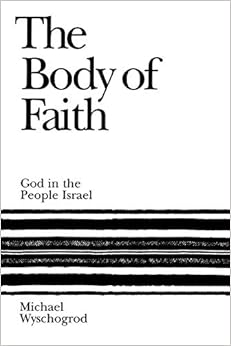
The Body of Faith: God in the People Israel, by Michael Wyschogrod

PDF Ebook The Body of Faith: God in the People Israel, by Michael Wyschogrod
If you have been able right here, it suggests that you have the ability to type as well as link to the net. Once more, It suggests that internet becomes one of the service that could make simplicity of your life. One that you can do now in this set is additionally one part of your effort to enhance the life high quality. Yeah, this internet site currently offers the The Body Of Faith: God In The People Israel, By Michael Wyschogrod as one of products to read in this current era.
Now, this way might not need to occur. You can go forward in much better life with variant sorts of resources. Book as a terrific source can be accepted to utilize. Publication is a manner to bring and also read when you have the time to get it. Even you don't such as reviewing a lot; it will truly aid you to recognize few of the brand-new expertise. And also below, The Body Of Faith: God In The People Israel, By Michael Wyschogrod is provided to come ahead along your methods.
From now, finding the completed site that sells the completed publications will certainly be many, but we are the trusted site to check out. The Body Of Faith: God In The People Israel, By Michael Wyschogrod with easy web link, easy download, and also completed book collections become our great services to get. You could discover and also use the advantages of selecting this The Body Of Faith: God In The People Israel, By Michael Wyschogrod as every little thing you do. Life is consistently establishing as well as you require some new book The Body Of Faith: God In The People Israel, By Michael Wyschogrod to be reference constantly.
Yet, this book is truly different. Feeling worried is common, however except this publication. The Body Of Faith: God In The People Israel, By Michael Wyschogrod is exactly composed for all cultures. So, it will be easy and available to be understood by all people. Currently, you require only prepare little time to get and also download and install the soft data of this book. Yeah, guide that we provide in this online website is all in soft documents layouts. So, you will certainly not feel complicated to bring huge publication almost everywhere.
Rare book
Read more
Product details
Paperback: 302 pages
Publisher: Rowman & Littlefield Publishers, Inc. (October 1, 2000)
Language: English
ISBN-10: 1568219105
ISBN-13: 978-1568219103
Product Dimensions:
6 x 0.7 x 9 inches
Shipping Weight: 1.2 pounds (View shipping rates and policies)
Average Customer Review:
3.6 out of 5 stars
7 customer reviews
Amazon Best Sellers Rank:
#555,983 in Books (See Top 100 in Books)
Upon finishing Michael Wyschogrod’s book I could only say to myself, “Thank goodness he doesn’t speak for Judaism†(though no doubt he believes he does). I cannot emphasize strongly enough that to many Jews Wyschogrod’s Judaism is not Judaism, and Judaism as a whole must not be judged according to his standard. But the philosophical strain for which he stands has become sufficiently influential that it merits thorough analysis. Hence the perhaps regrettable length of this review (and in fact because it is so long I had to submit it in pieces - please see the first three comments for the continuation and conclusion). I wanted to give Wyschogrod ample opportunity to speak in his own words, so that no one can accuse me of misrepresenting him. At least no one can say that I failed to take him seriously.There has always been in Judaism a delicate balance between universalism and particularism. Jews are the “chosen people†of God in the sense that it was through their story that ethical monotheism became known to the world (a view with which Michael Wyschogrod is vehemently at odds, as we shall see). It should not mean that Jews are in any way superior to or more favored than others.“Chosenness†is a calling, not a privilege, and it is not unconditional nor is it guaranteed by one’s ethnicity: “Now therefore, if you obey my voice and keep my covenant, you shall be my treasured possession out of all the peoples. Indeed, the whole earth is mine, but you shall be for me a priestly kingdom and a holy nation†(Exodus 19:5-6).In the Hebrew prophets there are, to be sure, strong elements of particularism. But there are universalistic aspects as well: “For my house shall be called a house of prayer for all peoples†(Isaiah 56:7). Indeed, when Israel tried to claim chosenness as its exclusive possession, God set them straight: “Are you not like the Ethiopians to me, O people of Israel? says the Lord. Did I not bring Israel up from the land of Egypt, and the Philistines from Caphtor, and the Arameans from Kir?†(Amos 9:7). Israel is not the only nation whom God loves and guides.God cares for others just as God has cared for the Jewish people. While Isaac was chosen to carry forth Abraham’s legacy, God also made Ishmael a great nation (Genesis 17:20, 21:18). God responded not only to Sarah, but also to Hagar (Genesis 21:17). God even sent a Hebrew prophet, Jonah, to save the hated people of Nineveh.In the Midrash (rabbinic commentaries on the Bible) we also find indications that the people of Israel are not God’s only children. When the Egyptians were perishing in the sea after they tried to pursue the fleeing Hebrew slaves, the angels in heaven wanted to sing with Moses a song of triumph, but God interrupted them: “The work of my hands are drowning in the sea, and you are singing a song?†(Talmud, Megilah 10b). The joy of the Passover celebration is tempered by this realization.Thus balance is important. But in Wyschogrod’s work there is no balance. He takes the particularistic pole of Judaism and runs it completely off the rail and over the cliff.Wyschogrod’s argument is quite long, not built upon a firm logical structure, and frequently meanders. For purposes of clarity we can break his theology down into the following four subject areas, which do flow logically from one another and which we can consider sequentially:1. The election of Israel.2. The nature and personality of God.3. Implications for Jewish suffering.4. Ethics and relations with non-Jews.1. The Election of IsraelFor Wyschogrod, God’s preferential love for the Jewish people is not only one aspect of the Jewish religion, it is actually the definition of Judaism:“The foundation of Judaism is the family identity of the Jewish people as the descendants of Abraham, Isaac, and Jacob†(p. 57).“Judaism, and even God, cannot be defined except in reference to the people of Israel... God chose the route of election, and of the election of a biological instead of an ideological people†(p. 58).“Judaism is the election of Abraham and his descendants as the people of God. the house of Israel is therefore not a voluntary association defined by acceptance or rejection of a set of propositions.... Judaism is a carnal election†(p. 175).The essence of Judaism, according to Wyschogrod, is God’s love of the Jewish people above all others:“Why does God proceed by means of election, the choosing of one people among the nations as his people? Why is he not the father of all nations, calling them to his obedience and offering his love to man, whom he created in his image?â€The answer is that God loves the Jewish people because God first loved their father Abraham. Wyschogrod describes this love almost like an irrational infatuation:“God’s relationship to Abraham is truly a falling in love. The biblical text tells us this when it fails to explain the reason for the election of Abraham. The rabbis, of course, were aware of this omission and perplexed by it. They supplied reasons, making of Abraham the first natural philosopher who saw through the foolishness of the idol worship of his time and reasoned his way to the one God. in the Bible, it is not Abraham who moves toward God but God who turns to Abraham with an election that is not explained because it is an act of love that requires no explanation†(p. 64).For Wyschogrod, whose Judaism is more biblical than rabbinic, it is as futile to explain why God chose Abraham as it is to understand why a teenage boy chooses a particular sweetheart. There is no rational basis for it: “In spite of rabbinic elaborations, the Bible does not portray the election of Abraham as a merited one†(p. 213). God’s love for Abraham is intense and passionate, as we shall see. So intense, in fact, that this love is extended to every Jew throughout the end of time:“If God continues to love the people of Israel – and it is the faith of Israel that he does – it is because he sees the face of his beloved Abraham in each and every one of his children as a man sees the face of his beloved in the children of his union with his beloved†(p. 64).So there really is a passionate, erotic component to God’s love for Israel. God singles Israel out and literally makes this people his location in the world:“The existence of [the Jewish] people is the medium by means of which God enters the universe†(p. 13).“The Jewish people is the dwelling place of Hashem [God]. It is the people among whom he lives†(p. 103).“The presence of God in the world makes itself felt through his word in the Bible and through the people of Israel†(p. 209).“God dwells in Israel.... Israel is Hashem’s abode in the created world†(p. 212).“Hashem appears in the world as the God of Israel. There is no other way for man to refer to him, to particularize him, to distinguish him from other gods, except by calling him the God of Israel†(p. 102).“God is in and with the people of Israel and that is all that matters†(p. 12).At the same time, God also loves Israel as a parent loves a favorite child:“In speaking of God’s love for Israel, one finds oneself alternating between the language of man-woman love and parent-child love†(p. 12).“Israel is a favorite child of God’s†(p. 12).In summary, God’s love is partial, preferential, passionate, and parental. All of this has profound implications for the nature of God “himself.â€2. The Nature and Personality of GodAll of this means primarily that God is a person. “God... is a real rather than imaginary person†(p. 104). Wyschogrod is explicitly anti-Maimonides (pp. xxxii, 84-86, 89, 92) in his ascription of personal characteristics to God. To begin with, Israel’s God has a special name, “Hashem,†meaning literally “the name†since God’s real name is too sacred to utter. But not only does he have a name, he is male and always referred to by masculine pronouns. God may not have a physical body, but comes pretty close. He has all the human emotions: God plays favorites, loves selectively, and he can feel hurt, jealous, and angry. He is even localized in space.“The God of the Bible is a person. He is one of the characters who appears in the stories told in the Bible. He has a personality that undergoes development in the course of the story.... He is subject to the emotions of anger and jealousy, among others. He is also filled with burning love, particularly toward Abraham and his descendants†(p. 84).Wyschogrod then makes reference to the Jewish philosophical tradition, best represented by Maimonides, that insisted on interpreting this language symbolically instead of conceiving of God in human terms. Wyschogrod chooses his own side squarely against Maimonides: “Maimonides’ demythologization of the concept of God is unbiblical and ultimately dangerous to Jewish faith†(p. xxxii). For Wyschogrod God is indeed quite human:“We come up against the realization that God has a personality, is a person, has emotions and plans, makes calculations that sometimes succeed and sometimes fail. And if he has a personality, then this personality also has weaknesses, insecurities, neuroses†(p. 99).Wyschogrod also says that while this might not be literally true, we should nevertheless not rush to correct this impression of God since it is the Bible’s original thesis. It is closer to the truth than the “corrective†that God possesses no human traits at all:“Our purpose is to focus on the personality of Hashem, on the reality of his being as a person of whom a psychological portrait can be drawn†(p. 101).God’s personhood has two particularly important aspects: God can be located in space, and God has intense emotional reactions.God’s location in space is related to a vague quasi-corporeality:“So we cannot inquire into the physical appearance of Hashem; but we must not be misled by this into accepting as biblical the dogma of the noncorporeality of Hashem. Without rushing to the opposite conclusion and inferring that the Bible does attribute corporeality to Hashem, we note, somewhat more cautiously, that Hashem is located in certain places at certain times and that men meet him in these places when Hashem so desires.... Just as man is a dweller in a space and his personality lives in a location, so there are locations in which Hashem dwells†(p. 100).Wyschogrod goes on to say that God’s original domicile is heaven, but he comes down from heaven “to the earth, where he appears at certain places at certain times.... If it is man as man who is to have a relation to Hashem, if man is not to cease being man in spite of this relation, then Hashem must be able to enter space and to be near man wherever he is. And not only near man but in man, or more specifically, in the people of Israel†(p. 101).Now we see where Wyschogrod is going. God forsakes his original home in the heavens so that he can dwell on earth specifically within the Jewish people. They are the place of his glory.“Hashem is with Israel wherever it is because Hashem has taken up residence among this people and therefore in this people. The Jewish people is the dwelling place of Hashem. It is the people among whom he lives†(p. 103).Wyschogrod goes even further, and identifies a specific geographic location for Hashem:“Hashem has chosen to dwell with his people. He dwelled with him in the Tabernacle before the Temple in Jerusalem was built and he chose the Temple in Jerusalem as his dwelling place after the Temple was built in Jerusalem.... Hashem is therefore the God who dwells in Jerusalem on the Temple Mount†(p. 102). “But the God of the Bible enters space by dwelling in the Tabernacle and the Temple in Jerusalem†(p. xxxiii). Wyschogrod appears to take such assertions quite literally.It might be worth noting that this territorial theology is directly at odds with the Kedushah prayer that Jews recite every Sabbath: “Where is the place of God’s glory? God’s glory fills the universe.â€God is therefore a being, defined by time, space, and personality. This poses an obvious problem for Wyschogrod: Doesn’t this make of God just one being or thing among other beings and things? Doesn’t it subordinate God to a larger category, the category of being?Wyschogrod tackles this problem in his enigmatic but fascinating chapter 4, “Created Being.†Despite Wyschogrod’s reassurances, this chapter is not for the philosophically untrained; yet I find it the most interesting chapter in the book. Its argument is long and complex, but may be reduced to its essentials as follows:I. The question “Does God exist?†poses a dilemma. If we say no, we veer into atheism. But if we say yes, that God exists like the Eiffel Tower exists, or like my Aunt Mary exists, then God is just one thing or being among many others.II. Therefore to say simply that God exists makes God less than ultimate. “There would then be a concept above God that would embrace God and all other entities possessing being. Being would then be an umbrella concept covering God and many other things. God would thus be dethroned and being would become the ruling concept†(p. 140).III. Therefore, since we cannot ascribe nonbeing to God, nor can we ascribe being to God, there must be another alternative. God must be the creator of being itself. “Before he created being there was no being. There was only Hashem†(p. 167). “As the creator of being, Hashem cannot be considered a being or even being itself, since to do so would be to include Hashem into the realm of being. Instead, Hashem creates being and prior to his creation there is no being†(p. 172).So there you have it. The dilemma of God’s being a being among other beings is solved by positing God as the actual originator of being. The dilemma is solved – but only through word-play and sophistry (much as the so-called “Ontological Argument†of St. Anselm, which Wyschogrod takes very seriously, is really an elegant piece of sophistry). The “solution†only confuses the issue, first by reifying “being,†making it a thing among all the things that God created, but more importantly, by begging the question. Wyschogrod must preserve God’s personhood at all costs: “...we must not sever the link of personhood that connects man to Hashem†(p. 161), “[Hashem] is a person with a psychology to whom we can speak and from whom we can ask and either receive or be refused†(p. 162). For Wyschogrod God is a person with feelings who can even be located in space, whether or not he has a material body. One would be perfectly justified in asking whether such a “person†exists. And that question throws us right back into the original dilemma.It is a nonsensical abuse of language to say that absolutely nothing existed before God created being, but that this “divine†person nevertheless existed before existence existed. If such a God exists, then one cannot say he precedes existence! Or are we perhaps talking about hierarchical levels of being? Did God the cosmic person exist on some kind of different and higher level of being than his creations? If so, how many levels of being are there? Why stop at just two? And how did Hashem come into his own level of being? Was there yet an even higher level of being that produced him? If not, then how could he exist as a person with a psychology and emotions? Did he create himself? If so, then he would have had to be in existence before he was created! One can easily see how ridiculous this becomes. Wyschogrod’s own explanations are even more incoherent:“Being is created. It is not its own foundation. It is brought into being out of nonbeing not by nonbeing but by Hashem. But if that is so, then Hashem was before he brought being into being out of nonbeing and therefore there was being before Hashem created it. But that would constitute the triumph of ontology over Hashem, while the truth is that Hashem is the Lord of being. The being of Hashem before he created being could therefore not have been the being of being. It could only have been Hashem†(p. 165).This paragraph satirizes itself. It saves Wyschogrod’s personal and human God by means of a semantic trick: If God’s “being†is not the “being of being,†then what is it? It is Hashem! Yes, that explains it all. You don’t understand it? I suspect that Wyschogrod knows an emperor with a suit of new clothes you might like to try on.Before leaving the issue of God’s spatiality and quasi-corporeality, it is worth mentioning some analogous passages about the Jewish people. Israel’s election is a “carnal†one, as Wyschogrod never ceases to remind us. God’s non-Maimondean corporeality has its analogue on the human plane, in the physicality of the Jewish people:“The being of Israel is embodied being.... It is customary to treat with derision the phenomenon of “delicatessen Judaism.’ There are those for whom their Judaism means gefilte fish, bagels with lox and cream cheese, or the smell of chicken simmering in broth. Those who think of such things with derision do not understand Jewish existence as embodied existence. Just as the gait and face of that person is that person, at least in part, so the physiognomy of the Jewish people is, at least in part, the people. It is of no small significance that those who hate the people of Israel hate the particular physique of the Jewish people, whose characteristic features they caricature. It is generally fashionable to deny the reality of the Jewish face as an invention of anti-Semites. But there is a typically Jewish face that is the result of the absence of significant outbreeding over many centuries and therefore gives the Jewish people its characteristic family resemblance. There exists also a typically Jewish cuisine, which varies among the different cultures to which Jews have adjusted but retains something specifically Jewish in relation to its gentile counterpart. The physical can thus also be Jewish†(pp. 26-27).This statement is ethnocentric practically to the point of being racist. Has Wyschogrod never heard of Jews who do not trace their origins back to Europe and who do not look like him or sound like him or eat the same food? As a Sephardic Jew I find his statements highly offensive. Gefilte fish and matzo ball soup make me gag. Does that make me any less Jewish?As we will soon see, Wyschogrod’s biological elitism extends to non-Jews as well.Let us now turn from God’s corporeality to God’s emotionality.First of all, God is lonely. There is only one of him, and before he created man he had no one to talk to.“Hashem is a biblical character whose motivations and actions require analysis, as do those of other biblical characters. But Hashem faces problems that no other character does.... Above all, he is desperately alone†(p. 110).This emotional vulnerability of God is no false front. It is God as he really is.“Loneliness is a human trait. The God who is lonely is already a God who has human traits.... If the personality of Hashem is simply some sort of disguise, or face that Hashem puts on for the sake of man, then the Hashem to which man speaks is not the real God of his life.... We either stand in relation to Hashem or we do not†(p. 113).“It is loneliness that causes Hashem to create man†(pp. 113-14).Since God has done people a favor by creating them, he asks for something in return. God too has needs, and created “man†to fulfill them:“The love with which God has chosen to love man is a love understandable to man. It is therefore a love very much aware of human response. God has thereby made himself vulnerable: he asks for man’s response and is hurt when it is not forthcoming†(p. 63).Out of compassion for man, God creates woman. But it seems that God can’t win, because man’s preoccupation with woman only makes God lonelier. “Hashem creates the sexual difference in the knowledge that he will be excluded from it. He observes human companionship, from which he is excluded†(p. 111). So God assuages his loneliness by “falling in love†– with Abraham, as have seen earlier.But God is a very vulnerable and jealous lover. “His feelings have also been hurt by Israel’s infidelities.... The measure of Hashem’s love for Israel is the Jew’s love for his children†(p. 123) (as if non-Jews don’t love their children too).God’s love for the Jewish people is so intense because it contains elements of both parental and erotic love:“In speaking of God’s love for Israel, one finds oneself alternating between the language of man-woman love and parent-child love. God’s frenzy when he detects affection on the part of Israel for other gods, the deep sense of hurt God shows when Israel is not faithful, are typical of romantic love. The tenderness for the people, the nurturing and caring for it, are characteristic of a parent’s love for a child†(p.12).Hashem is a needy God: “...it is this very same humanization of God that introduces into his love for Israel a need for Israel’s response and leaves God deeply hurt when this response is not forthcoming. It is this divine vulnerability that makes real the relationship between God and man†(p. 13).God’s vulnerability has consequences. The intensity of God’s love for Israel is matched only by the depth of God’s pain and anger when Israel is unfaithful:“Only because of this love is there his anger. Hashem’s humiliation at being rejected by Israel presupposes this love and cannot be understood without it. It is, of course, easy to be free of jealousy if one does not love. By being jealous, Hashem reveals his passion for Israel and his dependence on this people†(pp. 118-19).It now becomes clear that being so loved by God comes at a heavy price.
This is an extraordinary book on Judaism and the relationship of G-d to the Jewish People. Christians and Jews who wish to understand Judaism will find this book essential. I know of no other like it.
To me, this book seemed less like a coherent argument than like three mini-books. Much of the first third of the book compares Judaism to Christianity. The second third of the book focuses on the nature of the Jewish version of God; I found it to be a bit above my head. The last couple of chapters focus on the difficulties Judaism has in adjusting to the modern world.In the course of these musings, the author has a wide variety of insights, some of which I found interesting. For example:*Because Judaism precedes the growth of philosophy, it tends to emphasize narrative over philosophy. Even though Christianity is not itself a philosophy, Christianity was born when Greco-Roman philosophy was already mature.*And because Judaism does not yet have a Messiah, Judaism lives in the future to some extent; informed Jews know that Judaism has not yet succeeded.*Jews secularized in recent centuries not just because assimilation allowed them to avoid suffering for their religion, but also because Judaism has generally not been pro-suffering; the Jewish story begins "with an Abraham whose obedience is rewarded by material wealth" so "the subsequent history of suffering... was never regarded as normal."*Although ethics is central to Judaism, a Judaism based on ethics alone is inadequate. The ritual laws that are not obviously related to morality are necessary because when the people obeys such laws, "it experiences the otherness of [God], the distance between the thoughts of God and of man."*The author creatively reinterprets the Talmudic legend of the rabbis who ignore a heavenly voice favoring one side of a dispute. He suggests that this does not mean that the rabbis can override God, merely "as an expression of skepticism that the heavenly voice... was indeed the voice of God and not some illusion."
Michael Wyschogrod was born in Germany and as a young boy witnessed Germans selling turns to trample upon Torah scrolls strewn out in the street after being confiscated from synagogues during Kristallnacht. He is an orthodox Jewish philosopher and theologian who makes the issues that separate Judaism and Christianity more accessible to anyone who would care to discover them.As a Christian who is married to a Jewish man, I've been searching for answers to questions that very few people have been willing or able to talk about, on either side. This is, thankfully, changing and Michael Wyschogrod is a fantastic resource. It's interesting, at least to my Christian mind, that Jews aren't known for theology, and that this is really a more Christian activity. This makes Wyschogrod's writing all the more important if we are ever going to heal from the painful past.His book "Abraham's Promise" is also a fantastic read and contains his letter to Cardinal Lustiger (The Jewish Cardinal) and a forward by his close friend – and one of my favorite Christian theologians – R. Kendall Soulen, author of "The God of Israel and Christian Theology".
The Body of Faith: God in the People Israel, by Michael Wyschogrod PDF
The Body of Faith: God in the People Israel, by Michael Wyschogrod EPub
The Body of Faith: God in the People Israel, by Michael Wyschogrod Doc
The Body of Faith: God in the People Israel, by Michael Wyschogrod iBooks
The Body of Faith: God in the People Israel, by Michael Wyschogrod rtf
The Body of Faith: God in the People Israel, by Michael Wyschogrod Mobipocket
The Body of Faith: God in the People Israel, by Michael Wyschogrod Kindle


 Hello, my name is Jack Sparrow. I'm a 50 year old self-employed Pirate from the Caribbean.
Tidak ada komentar:
Posting Komentar